

Universities should begin measuring and reducing their greenhouse gas emissions before they become unmanageable, a senior lecturer at the Kwame Nkrumah University of Science and Technology, Kumasi (KNUST) has said, urging higher education institutions to examine their own environmental footprint alongside their research and innovation efforts.
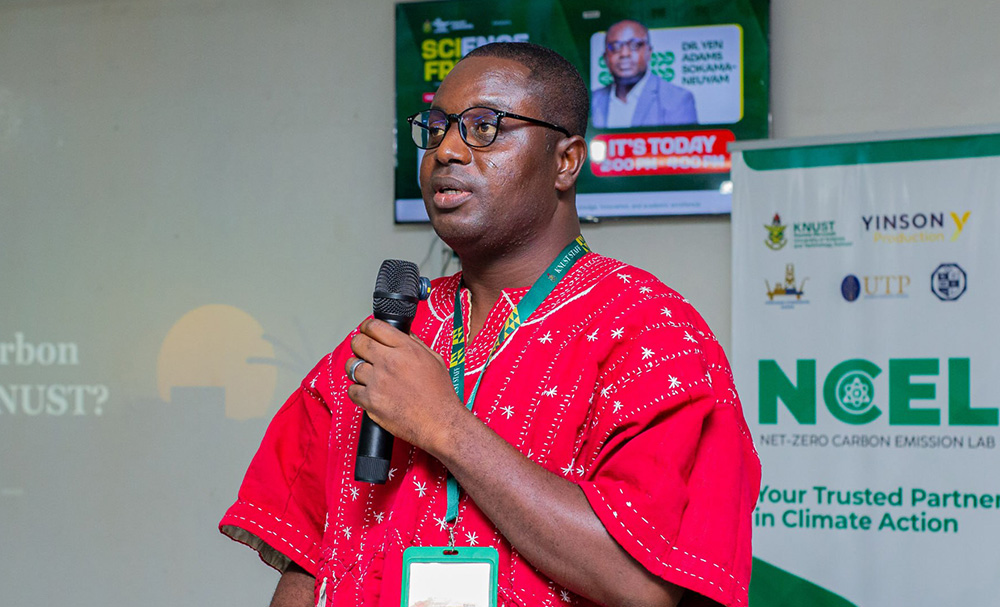
Speaking at the KNUST Libraries' ScienceFriday programme, Senior Lecturer in the Department of Petroleum Engineering, Dr. Yen Adams Sokama-Neuyam, said institutions must develop the expertise and systems needed to understand and manage their carbon emissions.
He noted that although Africa contributes less than 6% of global greenhouse gas emissions, the continent bears a disproportionate share of climate-related impacts.
"Universities should not only provide solutions through research and innovation but should also examine their own environmental footprint," he said.
Dr. Sokama-Neuyam explained that air-conditioning systems, which are essential in tropical environments, contribute significantly to greenhouse gas emissions and should be considered in sustainability planning for African universities.
He further stressed the importance of measuring emissions as a foundation for climate action.
"What can we do as individuals, as students, as staff and workers, to reduce the carbon dioxide being emitted within our offices and lecture halls?" he asked. "If we all do what is expected of us, we can make meaningful progress toward achieving our sustainability goals."
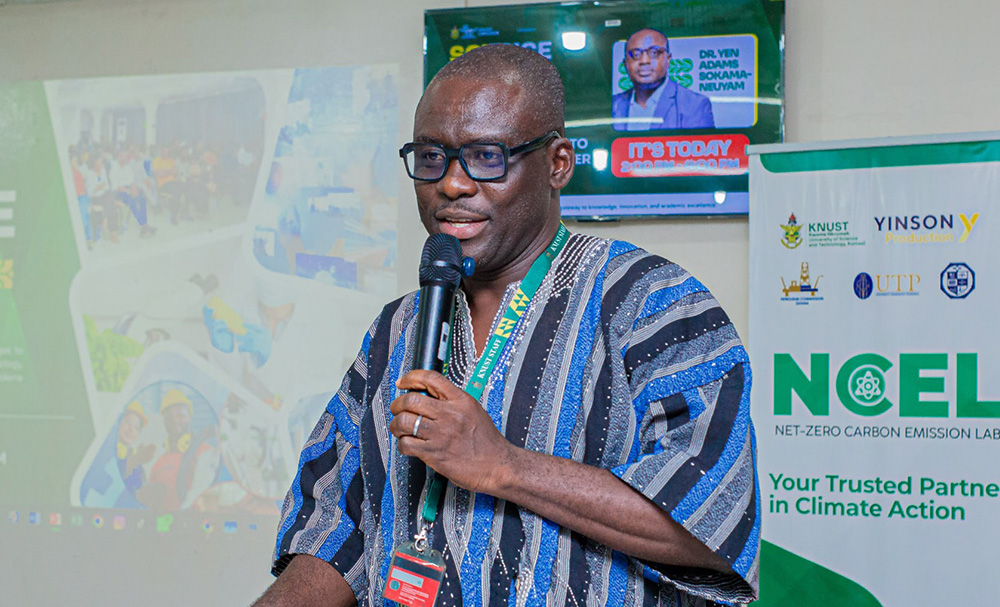
The University Librarian, Dr. Richard Bruce Lamptey, described Science Friday as a platform for intellectual engagement, research dissemination and evidence-based discussions on issues of national and global importance.
He said climate change remains one of the defining challenges of the modern era and emphasized the responsibility of higher education institutions to assess and improve their environmental impact.
"As a leading science and technology university, KNUST is uniquely positioned to champion sustainability initiatives," he said. "Understanding our carbon footprint is an important first step towards identifying opportunities for reducing greenhouse gas emissions and contributing to climate action commitments."


